You Have Left Nevada. The House Has Not.
A vacant home a few states away is a steady drain on time and money. Selling it does not have to mean flying back.
- Cash buyer
- Sold as-is
- No repairs or cleanout
- No listing commission
- Closing date set by you
- Nevada-local
Why a Vacant House in the Desert Keeps Asking for Attention
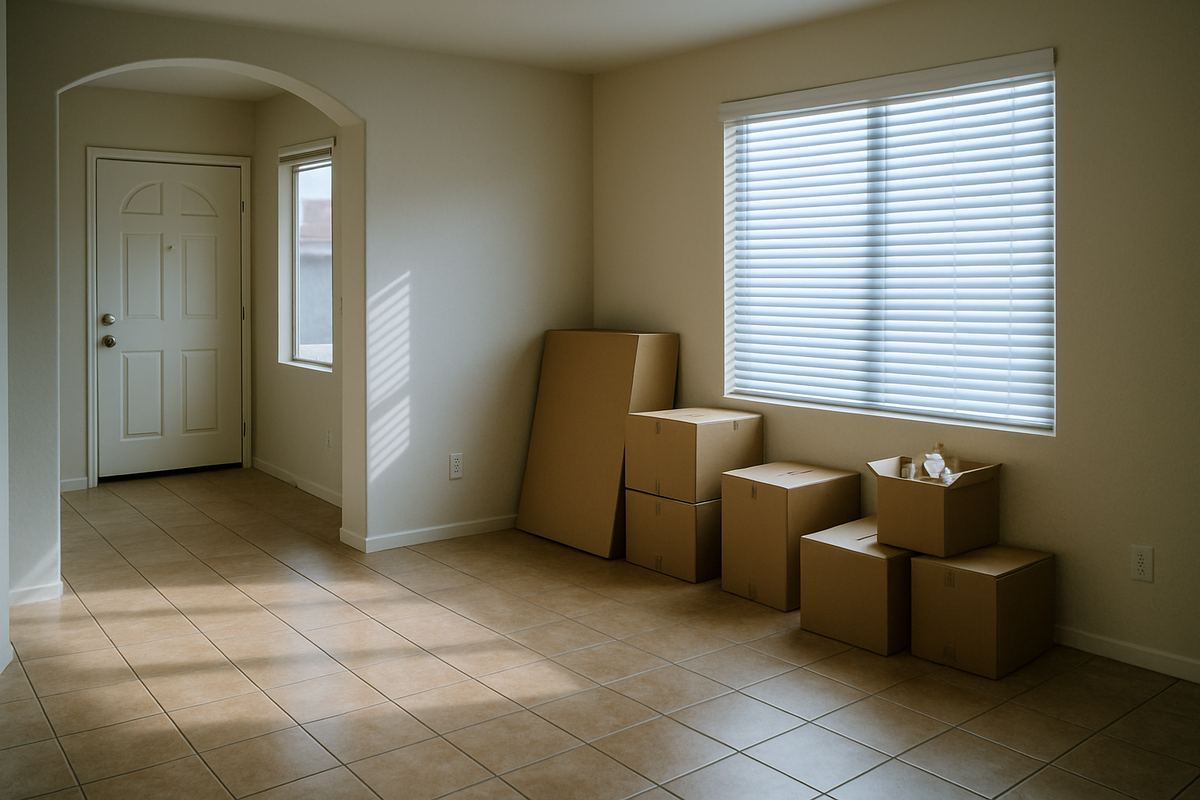
Owners who move first and sell later usually expect the house to sit quietly. In Las Vegas it rarely does. Summer heat is hard on an empty home if the air conditioning is turned off. Irrigation timers fail and landscaping dies, which can draw HOA notices. Pools need regular service. Packages and flyers stack up at the door. And most homeowner policies treat a long-vacant house differently from an occupied one, so it is worth reading the vacancy terms in your own policy or asking your insurance agent.
None of that is a disaster on its own, but it adds up when you are managing it by phone from another time zone. We buy houses in that exact state: furnished or empty, maintained or neglected, with or without the last of the belongings still inside. You decide the closing date, and you can handle nearly all of it from where you live now.
Closing From Another State
How remote signing usually works
Nevada law allows electronic notarization, including notarization over audio-video communication, under the notary provisions in Chapter 240 of the Nevada Revised Statutes. In practice, whether your sale uses remote online notarization depends on the title company and the documents involved. Many out-of-state sellers instead sign with a mobile notary near their new home, then ship the originals back overnight.
What the title company handles
The title company opens escrow, orders the payoff from your lender, requests any HOA resale documents, prepares the deed and coordinates recording with the Clark County Recorder. Your role is mostly reviewing and signing. Ask the title officer at the start which signing method they plan to use.
Getting us inside without you
We need one walkthrough. A neighbor, family member, property manager or a lockbox code can cover it, and we can share photos or a video walk afterward if you want to see what we saw.
Give Us the Address and the Date You Leave
We work backward from your departure. Send the basics and someone local reviews the property, phones you with a handful of questions, and after that puts a cash number in writing with a closing day matched to your departure.
- No showings to schedule around packing
- No repair list to finish before the truck arrives
- Signing can be arranged if you are already gone
Prefer a conversation? The red TALK TO ALEX button rings our line directly.
Protecting an Empty House Until the Sale Records
Simple habits that prevent bigger problems
Until closing, the house is still yours, and so is the responsibility for it. Leave the power connected so the air conditioning keeps the interior at a safe temperature through the hot months, and consider a smart thermostat you can check from your phone. Shut off the main water valve if no one is visiting regularly, since a slow leak in an empty house can run for weeks unnoticed. Forward the mail and stop deliveries so nothing piles up at the door.
A local set of eyes
A neighbor, friend or paid house checker who walks the property every so often is worth a lot. They can spot a broken sprinkler line, a gate left open, an HOA notice taped to the door or signs that someone has been inside. Share their contact with us too; they can often handle the walkthrough so you never have to make the trip. When the house you left sits behind a community gate, make sure the HOA or gate staff know who is allowed in.
Vacant homes in the valley can also attract squatters or break-ins, so if anything looks off, report it to local police and your insurer promptly. We still buy homes after that kind of trouble; it simply becomes one more factor we weigh when pricing the offer.
Four Steps for a Long-Distance Sale
- Send the basics. Address, how you hold title, whether anything is still in the house and how we can get access.
- Let us walk it. We visit once and give you a written offer you can review from wherever you live.
- Agree on a date. You pick the closing date. The title company confirms the signing method, remote or mobile notary.
- Sign and receive funds. After recording, your proceeds are typically sent by wire or check according to the title company's procedures.
If You Are Thinking About Renting It Instead
Some owners consider turning the empty house into a rental. That can work, but managing tenants from out of state usually means hiring a property manager and following Nevada's landlord-tenant rules. We compare the two paths in our breakdown of whether to rent out or sell a Las Vegas house. If the home needs work before it could be rented or listed, our page on houses that are not ready for the market speaks to that directly.
A useful test is to ask what the house would need before a tenant could move in, and who would oversee that work from where you live now. If the honest answer is a long list and no one local to manage it, a sale usually fits better. If the house is ready for a tenant and a manager you trust is already lined up, renting may be worth a closer look.
Where Out-of-State Owners Tend to Have Left From
We hear from former residents of every corner of the valley. A lot of calls come from owners who left Southern Highlands and the Enterprise area, from Henderson subdivisions, and from older neighborhoods closer to the center of town. Former military families who moved on orders also reach out, often after a first attempt at renting; our guide for service members on PCS orders covers their specific questions.
For a full walkthrough of the process and what you sign, read our process from offer to recording, or browse frequent questions from sellers about vacant homes and remote closings.
Common Questions on This Move
Do I have to come back to Las Vegas to sell?
In many cases, no. The title company can often arrange a mobile notary near you, send documents by overnight courier, or use remote online notarization when it fits the transaction. Which method applies depends on the title company and the documents, so confirm it with the title officer when escrow opens.
There is still furniture in the house. Is that a problem?
No. Tell us what you want saved and shipped, if anything, and we will agree in writing on what stays. Whatever remains after closing becomes our responsibility, so there is no cleanout crew for you to hire and no flight back to empty the garage.
The utilities are shut off. Can you still look at the house?
Yes, we can do a walkthrough with utilities off, although having power on helps us check the air conditioning, water heater and appliances. If the water is off, we will simply note that some systems were not tested, and the offer will reflect what we could see.
What if the HOA has sent violation notices since I left?
Open HOA balances or violations are common with vacant homes. They usually show up in the HOA resale documents the title company requests, and any balance is typically settled out of the sale proceeds at closing. Let us know about notices you have received so nothing is a surprise.